

GLUES
LIQUIDS
LASH LIFT
BROWS
OTHER PRODUCTS
OUTLET
How To Do A Patch Test For Eyelash Extensions
作者Holly Barrow %月 %日, %年 4 读


Table of Contents
Everything You Need to Know About Patch Testing for Eyelash Extensions
As a lash technician, patch testing is something you should be well versed in, having learned about it on your eyelash extension course. However, if you’re feeling a little rusty or want extra guidance on why, when and how you should carry out a patch test on your lash clients, we’ve got you covered!
What Is a Patch Test for Eyelash Extensions?
A patch test is a way for lash technicians to check whether your client is allergic to any of the eyelash extension products you intend to use during their beauty treatment. By applying a small amount of product to a specific area and waiting between 24 and 48 hours, you can usually detect whether your client has experienced a reaction.

How Do You Carry Out a Patch Test for Eyelash Extensions?
In a hair salon, a new client who has booked to have their hair coloured will typically be required to have a patch test first. This involves the hairdresser applying a small amount of hair dye to the client’s skin, allowing them to check whether the paraphenylenediamine in the hair dye has caused a reaction after a specific period of time.
When it comes to an eyelash extension patch test, lash technicians are testing the eyelash glue rather than the individual lash extensions themselves. The cyanoacrylate in lash glue can cause problems, including irritation around the eyes or an allergic reaction.
Carrying out a patch test for eyelash glue can be more complicated than patch testing with hair dye. It is not simply a case of applying eyelash extension glue to your client’s skin. You should never apply lash glue directly to the skin, as cyanoacrylate is a known irritant that can cause pain and discomfort.

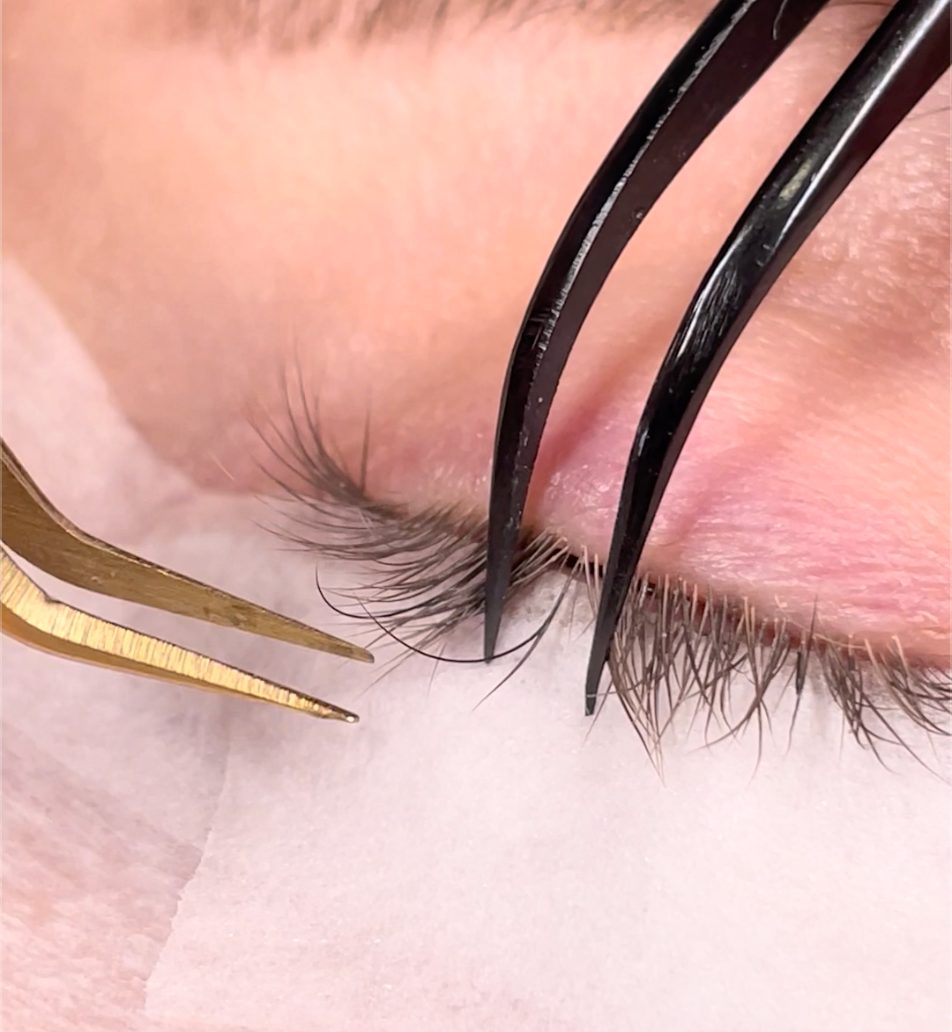
One of the most effective patch testing methods for eyelash extensions is to apply individual eyelash extensions to up to 10 natural lashes on each of your client’s eyes. You should also use this as an opportunity to patch test any other lash products that you typically use during the lash application process, including your pre-treatment products.
The patch test should be carried out at least 24 to 48 hours before the lash treatment. Remember, you only need to carry out a patch test on new clients. While it might seem like a lot of effort, you should not need to repeat the test for the same client unless you completely change your products.
How Long Will a Patch Test for Eyelash Extensions Take?
The test itself should not take longer than 30 to 45 minutes. We recommend carrying out a consultation before starting the patch test process.
This includes preparing your client’s natural lashes as you typically would before treatment and applying some eyelash extensions through their lash line. This should not look unusual if you use very fine eyelash extensions with a similar length and curl to your client’s natural lashes. By doing this, you can determine how your client responds to the products you intend to use.

What Happens After a Patch Test for Eyelash Extensions?
It is crucial to remember that patch tests cannot be considered 100% accurate. Unfortunately, they may not always provide a conclusive answer.
However, if your client does not show any of the usual signs of sensitivity to the products you have used, you can proceed with the eyelash extension application. If your client has a reaction to the products, you should be prepared to remove the lash extensions safely and effectively, ensuring that you remove all traces of the lash glue, which is the most likely culprit.
Most importantly, if your client experiences an extreme reaction to the products, you should encourage them to seek medical advice.
Do You Need to Carry Out a Patch Test Every Time?
New clients may be curious about how often they need to have patch tests. Let’s be honest, they can be considered quite an inconvenience.
Thankfully, you can reassure your clients that you should only need to carry out an eyelash extension patch test before their first appointment with you. Unfortunately, there is no guarantee that they will not develop a reaction to the products further down the line. However, carrying out a patch test before their first treatment means you are taking the necessary precautions.
You should also check your insurer’s guidelines to ensure you are covered. Some insurers may not require you to carry out a lash glue patch test, although many still do.

If Patch Tests Are Not Always Accurate, Why Are They Needed?
It is always a good idea to check with your insurance provider whether they require you to carry out patch testing. Generally speaking, many insurance providers now refer lash technicians to their suppliers for guidance on patch testing requirements.
Ultimately, patch testing is at the discretion of each individual business owner. If you do not enforce patch tests, the most important thing you can do is make your clients aware of the risks associated with eyelash extensions and offer them a test so they can make an informed decision. It is also worth recording this on their consultation card for your records.






所有订单实现碳中和运输
51959kg
已去除运输排放量
这相当于...
212823
英里的普通燃油汽车的行驶里程的排放量