Cat Eye Lash Mapping Guide!
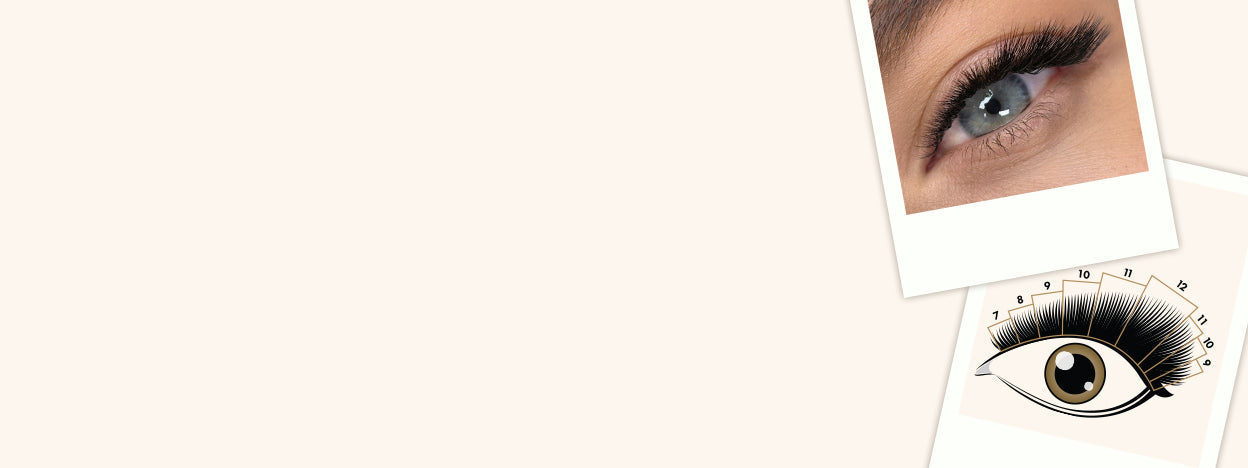

Table of Contents
Cat Eye Lash Map: Lengths, Mapping Steps and Eye Shapes
Lash mapping is essential for a gorgeous set of eyelash extensions - it shows our professionalism, keeps your lash sets even across both eyes and gives each of your clients bespoke eyelash extension looks that are tailored to their preferences, suit their eye shape and flatter their bone structure.
Whether you’ve been in the lash industry for five minutes or 15 years, you’ve undoubtedly had a client or two ask for a lash style like Cat Eye Lashes - but what exactly are Cat Eye Lashes, and how do you map them?
Cat Eye Lashes are known for their sexy flick on the outside of the eyes, creating an elongated effect, whilst also adding a sweep which is in equal parts gorgeous and iconic.
Cat Eye Lash Map: Example Lengths and Numbers
A cat eye lash map gradually increases in length from the inner corner towards the outer part of the eye, before tapering down at the very outer corner. The longest section sits before the final outer-corner lashes, helping to create that gorgeous flick without weighing down the finer lashes at the edge.

From inner to outer corner: 7mm → 8mm → 9mm → 10mm → 11mm → 12mm → 11mm → 10mm → 9mm.
These numbers describe the example above, rather than a map to use on every client. Adjust the lengths, curls and section widths to suit the strength and length of their natural lashes, their eye shape and the finish they would like.
How to Create a Cat Eye Lash Map: Step by Step
-
Mark the middle of each eye. As with any eyelash extension set, begin by marking out the middle of the eyes on your client's eyelids with an eyeliner pencil and then marking the middle of the eyes onto the under eye patches so that your lash set is symmetrical across both eyes.

-
Plan the longest section. Next, split the section towards the outer corner of the eyes in half, and then half again - the segment closer to the outer corners will be your longest section of lashes, before you taper down at the very edge.

-
Taper the outer corner. Now, split the final section of the outer corners into three equal parts - though we’re aiming for a sweeping flick towards the outer corners, we still want to ensure that we are protecting the natural lashes there. Using too long a length of lash extensions in the outer corners of the eyes also increases the likelihood of the natural lashes drooping and giving your client's eyes a sad appearance.

-
Complete the inner sections. The sections towards the inner corners of the eyes will be much wider than those in the outer corners; this will also help with that elongation we want to achieve! Start with shorter lengths at the inner corner and gradually increase towards your longest section.

Which Eye Shapes Suit Cat Eye Lashes?
Despite them being an eyelash extension style that almost all of your clients ask for at least once, they’re not the best fit for every client.
A set of Cat Eye Lashes on the wrong client can cause their eyes to look super far apart, droopy, or sad - not ideal! Cat Eye Lashes are very well suited for those clients with eyes which are a little closer together as it will create the illusion of extra distance between them. If a client with a proportional set of eyes (this refers to the space between their eyes being the same size as the width of their eyes themselves) would love a set of Cat Eye Lashes, then you can still make their lash dreams come true, just try using fewer eyelash extension lengths, or maybe suggest a different lash mapping style that's similar but may be more suitable for them like Squirrel Lashes as it may be more complementary.
Clients with almond shaped eyes will also benefit from Cat Eye Lashes (assuming they are not very widely spaced) as it will really accentuate that gorgeous shape, and clients with natural lashes that grow upwards will also look amazing with this lash mapping style!
| Client feature | Mapping consideration |
|---|---|
| Closer-set eyes | The elongated outer section can create the appearance of more distance between the eyes. |
| Almond shaped eyes | A cat eye map can accentuate the shape, taking eye spacing and natural lash direction into account. |
| Widely spaced eyes | Consider whether further elongation would exaggerate the spacing, and discuss another mapping style if needed. |
| Straight or downward-growing lashes | Assess curl choice and outer-corner placement carefully to avoid a drooping finish. |
| Fine or weak outer-corner lashes | Reduce length and weight to suit the natural lashes rather than copying the example map exactly. |

How to Avoid Drooping Outer Corners
If your client's natural eyelashes grow straight or downwards, not all hope is lost! While using regular lash curls can cause that drooping effect, swapping to eyelash extensions with a curl better suited to lifting those lashes, like M-Curl lashes, L-Curl lashes, or even Extreme L-Curl lashes, can give more lift to those natural lashes and still create a gorgeous set!
Remember that curl is only part of the picture. Keep the longest section before the very outer corner, taper down towards the final lashes, and choose lengths and weights that the natural lashes can comfortably support. Check the finished shape with your client's eyes open, as well as closed.
Cat Eye vs Kitten Eye Lash Mapping
If your client loves the idea of a cat eye but would prefer a softer finish, a kitten eye lash map may be worth discussing. Both aim to elongate the eye, but a kitten eye is generally a softer interpretation, with a less pronounced outer flick.
Rather than simply making the outer corners longer, adapt the position of the longest section and the transition between lengths to suit the client. Styling names can vary between lash artists, so use reference photos during your consultation to agree on the look they have in mind.
Cat Eye Lash Maps for Classic, Hybrid and Volume Extensions
Cat eye describes the shape of the lash set, rather than the application method. You can create that elongated effect with Classic, Hybrid or Volume lashes, adapting your lengths, curls and lash weight to suit each client.
- Classic cat eye lashes: use individual extensions to follow the map for a defined finish.
- Hybrid cat eye lashes: combine individual extensions and fans while maintaining the same overall mapping shape.
- Volume cat eye lashes: use suitable lightweight fans to create a fuller finish, keeping the outer-corner taper and natural lash strength in mind.
The example map above provides a guide to the shape, but the same lengths and weights will not be suitable for every application method or every client.
Is a Cat Eye Lash Map the Same for Cluster Lashes?
A cat eye shape can also be created with cluster lashes, but clusters and professionally applied individual extensions use different application methods. This guide focuses on professional eyelash extensions. If you’re comparing the two, take a look at our guide to cluster lashes vs individual lashes.
Cat Eye Lash Mapping FAQs
What lengths should you use for a cat eye lash map?
The example in this guide uses 7, 8, 9, 10, 11, 12, 11, 10 and 9mm from the inner to outer corner. These lengths illustrate the shape; adjust them to suit your client's natural lash length and strength, eye shape and preferred finish.
Where should the longest lashes go in a cat eye map?
The longest lashes sit towards the outer part of the eye, before the final outer-corner sections. Taper down after this point to create the flick without overloading the finer lashes at the very edge.
Can you create cat eye lashes with volume extensions?
Yes! Cat eye refers to the styling shape, while Volume refers to the application method. Follow the cat eye map using appropriately weighted fans, adapting the lengths and curls to the client's natural lashes.
What is the difference between cat eye and kitten eye lash mapping?
A cat eye map creates a more pronounced outer flick, while kitten eye styling generally gives a softer elongated finish. As styling names vary between lash artists, agree on the desired effect using reference photos during the consultation.
Why do cat eye lashes sometimes look droopy?
Outer-corner extensions that are too long or heavy, or curls that do not suit the natural lash direction, can contribute to a drooping appearance. Assess the natural lashes, taper the outer corners and adjust the curl, length and weight as needed.
So there you have it, your ultimate guide to lash mapping for a stunning set of Cat Eye Lashes. By following these steps, you'll be able to offer your clients a lash style that perfectly accentuates their eyes and leaves them feeling amazing with a captivating lash look that's sure to turn heads!
Check out these featured products