

GLUES
LIQUIDS
LASHES
BROWS
OTHER PRODUCTS
OUTLET
Allergic Reactions in the Lash Industry — What Every Lash Tech Needs to Know
by Hanna Putjato أبريل 27, 2026 4 min read
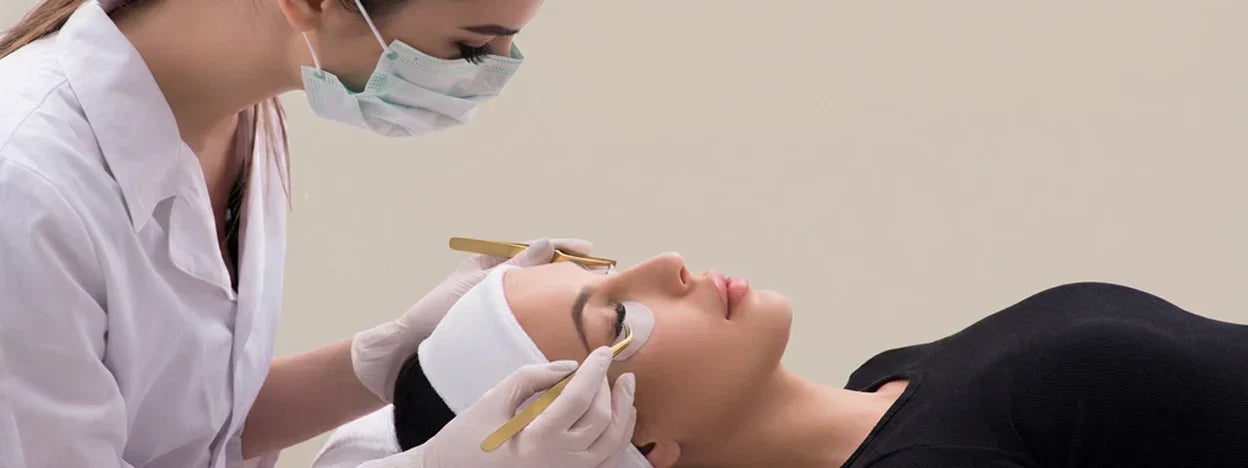

Table of Contents
An honest guide to client reactions, technician reactions, and how to protect everyone in the room — from someone who's experienced both sides of it.
In ten years of full-time lashing — and having done thousands of sets — I had exactly two clients develop an allergic reaction. A small number, but those two cases taught me more about lash safety than any training course. And eventually, I developed a reaction myself. So let's talk about it honestly.
Why do lash extensions cause allergic reactions?
Right now, there is only one way to apply semi-permanent lash extensions: attaching synthetic fibres to natural lashes one by one, using a cyanoacrylate-based adhesive. That's a strong chemical — and there's currently no way around it.
You might have heard about sensitive glues or UV glues as safer alternatives. They are worth knowing about, but let's be clear:
- Sensitive glues contain less cyanoacrylate, which sounds ideal — but a lower concentration of bonding agent means weaker eyelash retention. If lashes fall out faster, clients come back more often, which could mean more total exposure over time.
- UV glues are genuinely exciting and do reduce reaction risk — but despite what some brands claim, they still contain cyanoacrylate. Faster curing means a shorter fume release window, which helps. But they are not reaction-proof.
- Patch testing is worth offering, especially to new clients or anyone flagging sensitivities. But be honest with clients: a clear patch test is no guarantee. Many reactions develop gradually over months or even years of regular appointments.
How common are allergic reactions to lash extensions?
Reactions are relatively rare, and importantly, they almost always build up gradually rather than appearing out of nowhere. In ten years of full-time lashing, I had 2 clients who became allergic — both had been regular clients for over two years before any sign of reaction appeared. Most experienced lash techs report roughly 1–2 reactions every 5 years.
Early warning sign: If a client says her eyelids have been feeling itchy or slightly puffy after appointments, take it seriously. That's not normal, and it's the first sign of a developing reaction. Stop treatments straight away. The best alternative to switch to is lash lift — it uses a completely different chemistry (thioglycolate-based rather than cyanoacrylate), and is usually well tolerated even by clients who have reacted to lash adhesive.
Both of my clients who reacted were long-term regulars. As soon as we spotted the signs, we stopped and moved to lash lifts. Disappointing? Yes. Manageable? Completely.
If you're seeing reactions more often — check your technique
More frequent reactions than average are usually down to application technique rather than the client's sensitivity. The most common culprits are:
- Too much glue applied too close to the lid. Less really is more with adhesive. The closer the bond point is to the skin, the higher the exposure.
- The client's eyes not being fully closed. If you tape the lashes upward and expose the waterline, you're dramatically increasing contact with adhesive and fumes through one of the most absorbent membranes on the face.
- The glue drop being too close to the client's face. Cyanoacrylate fumes are absorbed not just through the eye area — also through the nose and mouth. Keep your glue drop as far from your client's face as possible. This one is underrated.

Can lash technicians develop allergic reactions?
This is the part nobody talks about enough. Clients get occasional exposure. We get it every single working day.
I had migraines for years. I put them down to long hours. It wasn't until I stepped back from lashing to focus on building the brand — still working long hours — that the headaches disappeared. And every time I assist at a training session, they come back. The link is unmistakable.
Technician reactions can show up as:
- Migraines or persistent headaches
- Runny nose or sinus irritation
- Puffy or irritated eyes
- Eczema or skin irritation, particularly on the fingertips from direct adhesive contact
Once a technician reaction develops, it rarely reverses. Prevention is everything here.
How to protect yourself — and your clients
- Ventilate your room properly. If you can, invest in an extractor fan. This is the single most impactful thing you can do for your long-term health as a technician.
- Wear a face mask and protective glasses. Make it non-negotiable, every single day — not just when you remember.
- Keep the glue drop far from both faces. Fumes travel further than most people realise, and they're being absorbed the entire time the glue is open.
- Buy from reputable suppliers. Always check that your lash adhesives comply with local safety regulations. All London Lash glues and liquids are fully compliant.
- Diversify your treatment menu. Facials, brow treatments, and lash lifts complement extensions beautifully — they allow clients to spend more per visit and reduce your daily adhesive exposure. Your long-term career will genuinely thank you for this one.
A note on UV glues
Our UV glue collection is launching soon, with the first product available in two weeks. To be transparent with you — UV glues still contain cyanoacrylate, so they won't eliminate reaction risk entirely. But faster curing means a shorter fume window — and over years of daily exposure, that makes a real difference.
If you'd like to be among the first to hear about our UV system and UV glues, sign up to the mailing list below.
Wishing you nothing but happy clients and zero reactions.

Hanna Putjato
Passionate lash tech & founder of London Lash
Want to know more about lash safety? [Read more about allergic reactions here].

Carbon-neutral shipping on all orders
50858kg
shipping emissions removed
That's like...
208313
kilometers driven by an average gasoline-powered car