
black friday deals
GLUES
LIQUIDS
LASH LIFT
BROWS
OTHER PRODUCTS
OUTLET
Pre-Glued Lashes: What Lash Technicians Need to Know
by Natalia Carvalho November 18, 2026 4 min read
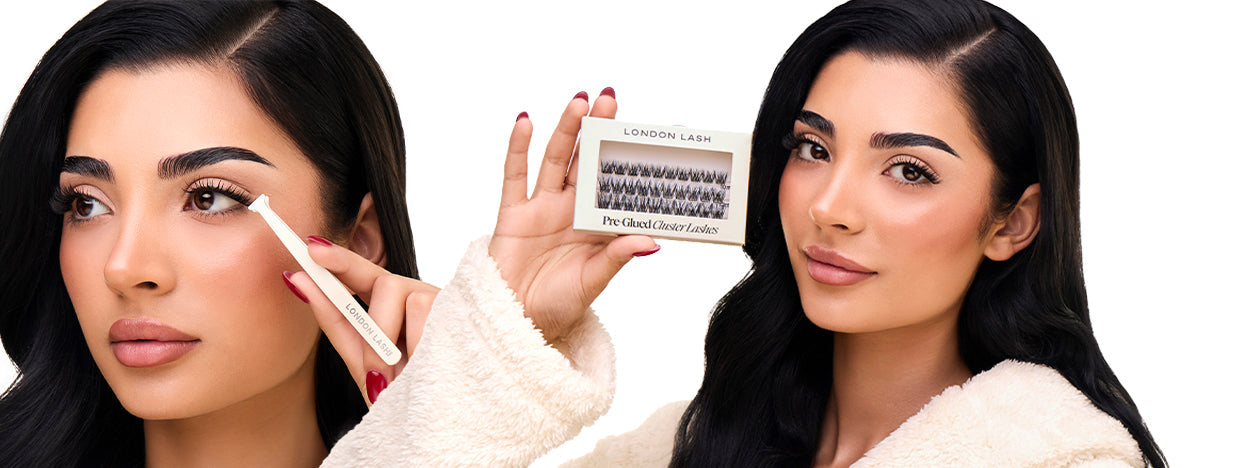

Table of Contents
Scroll through TikTok or walk down any British high street right now, and you will see pre-glued lashes everywhere. From local chemist shelves to viral social media hauls, pre-glued cluster lashes UK with a pre-bonded adhesive strip are having a massive moment.
Naturally, many UK lash technicians are wondering whether these press-on clusters threaten salon bookings (or whether they are secretly creating a wave of clients who will soon need natural lash rehabilitation).
Understanding how pre-glued lashes actually work puts you in the driver’s seat. When you can explain the real differences between DIY press-on clusters and salon lash extensions without sounding defensive, clients trust your expertise even more.
How Pre-Glued Lashes Actually Work
Unlike traditional strip lashes that require wet glue, modern pre-glued lashes are lightweight synthetic clusters arranged in small, customisable segments. Each segment comes coated at the base with a pre-applied, pressure-sensitive adhesive strip that requires zero drying time.
For a secure hold, users must apply them to a completely dry, oil-free lash line and keep the clusters a few millimetres away from the waterline, as moisture immediately weakens the bond. Even though there is no liquid cyanoacrylate involved, a patch test is still recommended before full application.
Crucially, responsibly pre-glued clusters are designed strictly for a single-use, daily wear (and must be removed before sleeping). Problems in the salon usually start when consumers buy extended-wear press-on clusters or ignore daily removal instructions and wear them back-to-back for days.

The Risks Clients Rarely Hear About
Pre-glued clusters are convenient for a weekend wedding or a last-minute night out, yet misuse is where problems creep in. Because these segments span across multiple natural lashes at once, they bypass the golden rule of professional lashing: one-to-one isolation.
-
Natural lashes grow at different speeds. When five or six hairs are anchored to a single rigid band for a week, fast-growing anagen lashes tug painfully on neighbouring follicles.
-
Many DIY users avoid washing their face properly so their clusters stay sticky longer. Sebum, dead skin, and mascara build up along the lash margin, creating a breeding ground for blepharitis? and lash mites.
-
Instead of dissolving the tacky band with an oil-based remover, impatient wearers often peel the clusters off dry, taking healthy natural lashes with them.
Pre-Glued Lashes vs. Eyelash Extensions
When a regular client compares salon lash extensions vs. cluster lashes, a clear, factual breakdown speaks louder than a sales pitch. Here is how press-on lashes vs. eyelash extensions stack up side by side:
|
Feature |
Pre-Glued DIY Clusters |
Professional Eyelash Extensions |
|
Application & Isolation |
Multi-lash segments applied onto a dry lash line a few millimetres from the waterline |
Individual extensions or handmade fans isolated 1:1 per natural lash |
|
Recommended Wear |
Single-use, daily wear only (remove before sleeping) |
2–4 weeks with routine infills |
|
Adhesive Type |
Pre-applied, pressure-sensitive temporary adhesive strip |
Medical-grade cyanoacrylate cured to match salon humidity |
|
Customisation |
Selected segment lengths out of a retail box |
Bespoke mapping, weights, and curls tailored to eye symmetry |
|
Lash Health Impact |
Safe when worn for a single day and removed gently before bed |
Safe long-term when weight and isolation are properly maintained |
How UK Lash Techs Can Turn This Trend to Their Advantage
Rather than fighting the DIY, savvy lash artists across the UK are positioning themselves as trusted lash health experts, and even retailing safe daily-weat options for clients between sets.
-
If a client arrives with sticky residue or sparse patches from sleeping in press-on clusters, welcome them warmly. Explain gently how multi-lash bridging affects growth cycles and map out a lightweight, restorative classic or angel set.
-
Pre-applied adhesive strips do not always melt cleanly with standard cream remover alone. Always book an extra 15 minutes for a thorough oil-based breakdown and foaming lash bath before applying a fresh full set.
-
If clients want an emergency backup while on holiday or between infill appointments, recommending a trusted, single-use daily-wear cluster (alongside clear instructions to patch test and remove before sleeping) protects their natural lashes until they are back on your couch.
-
Remind followers on Instagram and TikTok that a retail box cannot correct hooded lids, downturned outer corners, or subtle eye asymmetry the way custom salon styling can.

Frequently Asked Questions
Can I apply professional eyelash extensions straight over pre-glued lashes?
No. You must remove every trace of pre-glued clusters and tacky adhesive residue before applying professional extensions. Applying cyanoacrylate adhesive over leftover temporary glue causes poor retention, stickies, and potential eye irritation.
Are pre-glued lashes damaging to natural lashes?
When used properly (applied to a clean, dry lash line a few millimetres from the waterline, worn for a single day, and removed gently before sleeping) pre-glued lashes are safe for natural lashes. Damage occurs when wearers sleep in them, wear them for multiple days without isolation, or pull them off dry.
Do clients still need a patch test for pre-glued cluster lashes?
Yes. Even though pre-glued clusters do not use professional cyanoacrylate extension glue, a patch test is always recommended before full application to rule out sensitivity to the temporary adhesive strip.
How do you remove stubborn pre-glued lash residue in the salon?
Knowing how to remove pre-glued lash residue properly protects both natural lashes and your adhesive bond. Use a targeted oil-based or dual-phase eye makeup remover on microbrushes to gently dissolve the pressure-sensitive adhesive strip, followed by a thorough foaming lash shampoo cleanse and saline rinse. Ensure the natural lashes are completely clean, oil-free, and dry before starting your full set.