Sensitive Lash Glue: What Lash Techs Need to Know

Table of Contents
Sensitive lash glue” is not a guarantee that an adhesive will prevent irritation or an allergic reaction. Professional eyelash - extension adhesives commonly contain cyanoacrylate, and a product marketed as sensitive may still contain ingredients to which a client or technician can react. Always check the ingredients and safety data, follow the manufacturer’s instructions and avoid treating marketing terms such as “sensitive” or “hypoallergenic” as medical assurances.
Sensitive Lash Extensions Glue: Does it Really Do What You Expect?
A lot of questions arise when it comes to Eyelash Glue, particularly those about 'sensitive' Lash Glue. Is it worth it? Will it really help with allergies to eyelash extensions? Or is it just a marketing ploy to get people to purchase weak lash extension glue? Well, we're here to answer all your questions and discuss the truth about sensitive Eyelash Glue for lash extensions.

What Makes A Lash Glue ‘Sensitive’?
Put simply, it’s the amount of cyanoacrylate inside it, the less cyanoacrylate, the more ‘sensitive’ it is deemed to be. Cyanoacrylate is the chemical which helps glue dry and it's present in all glues, from lash glue to super glue.
What does this mean, though? It means your glue dries slowly if there's less cyanoacrylate present, which actually exposes your client to the fumes from the glue for longer and increases your working time as you have to hold the lash extensions in place for longer while the glue cures on the natural eyelashes. It also increases the risk of stickies because it stays wet for longer.
Does Sensitive Eyelash Glue Prevent Allergic Reactions?
In short, the answer is - 'No'. It might slow the onset of an allergic reaction or make it less severe in the first instance or two, but if a client is allergic to the cyanoacrylate in lash glue, there’s nothing you can really do to change that fact.
Allergic reactions to glue are accumulative, that means they build up over time as the body continuously tries to tell you ‘I don’t like this...’ - with that being the case, reactions will 1) Become more severe over time, and 2) Are more likely to affect clients who have been with you for a while. Read more about allergies to lash extensions and adhesives in this blog post.

Lash Glue Allergy vs Irritation
An allergic response and irritation from lash adhesive are not necessarily the same, although some of their signs can overlap. Lash technicians should not attempt to diagnose a reaction. If a client develops symptoms, stop the treatment and advise them to seek appropriate medical guidance.
| Area | Possible Allergic Response | Possible Irritation or Chemical Exposure |
|---|---|---|
| Possible cause | An immune response to an ingredient within the adhesive or another product used during the treatment. | Direct exposure to adhesive vapours or contact with an irritating product. |
| Possible signs | May include itching, swelling, redness or a skin reaction around the treatment area. | May include stinging, watering, redness or discomfort in or around the eyes. |
| Timing | Symptoms may appear after exposure and can vary between individuals. | Symptoms may develop during or after the treatment, depending on the type and level of exposure. |
| Immediate response | Stop the treatment. Do not diagnose the reaction or recommend medication. Advise the client to seek appropriate medical guidance. | Stop the treatment and follow the manufacturer’s safety guidance. The client should seek medical advice if symptoms persist or cause concern. |
| Future treatments | Do not promise that a different or “sensitive” adhesive will be safe. Further treatment should only be considered following appropriate professional guidance and in accordance with product and insurance requirements. | Review the treatment setup, product instructions, eye closure, positioning and working environment before considering another appointment. |
This table provides general information and should not be used to diagnose a reaction. Seek urgent medical assistance if a client experiences breathing difficulties or significant swelling affecting the face, throat or eye area.
Does Eyelash Glue for Sensitive Eyes Prevent Chemical Burn?
No, again it still has the same ingredients and it still produces fumes - like we touched on above, due to its slower drying time you and your client are actually exposed to those fumes for longer, so if their eyes are open during the treatment, they’re just as likely, if not more likely to experience a chemical burn with a slower drying glue.
So Sensitive Lash Glues Don’t Exist?
We can’t speak for every lash brand, but we never market any glue as ‘sensitive’ for the above reasons - it leads you to believe your client’s allergy will be cured when really, it may reduce it for a while, only for it to come back worse in future.
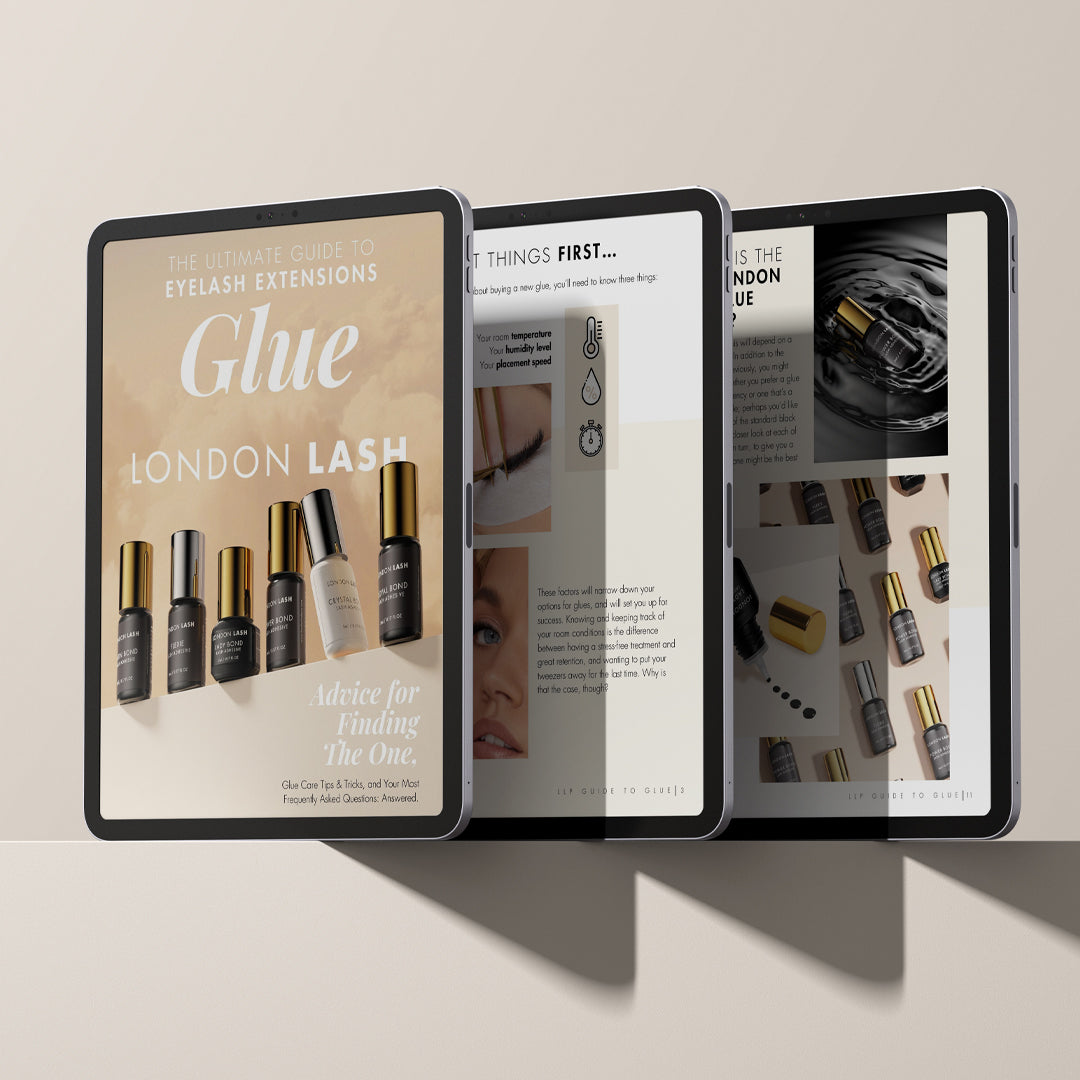
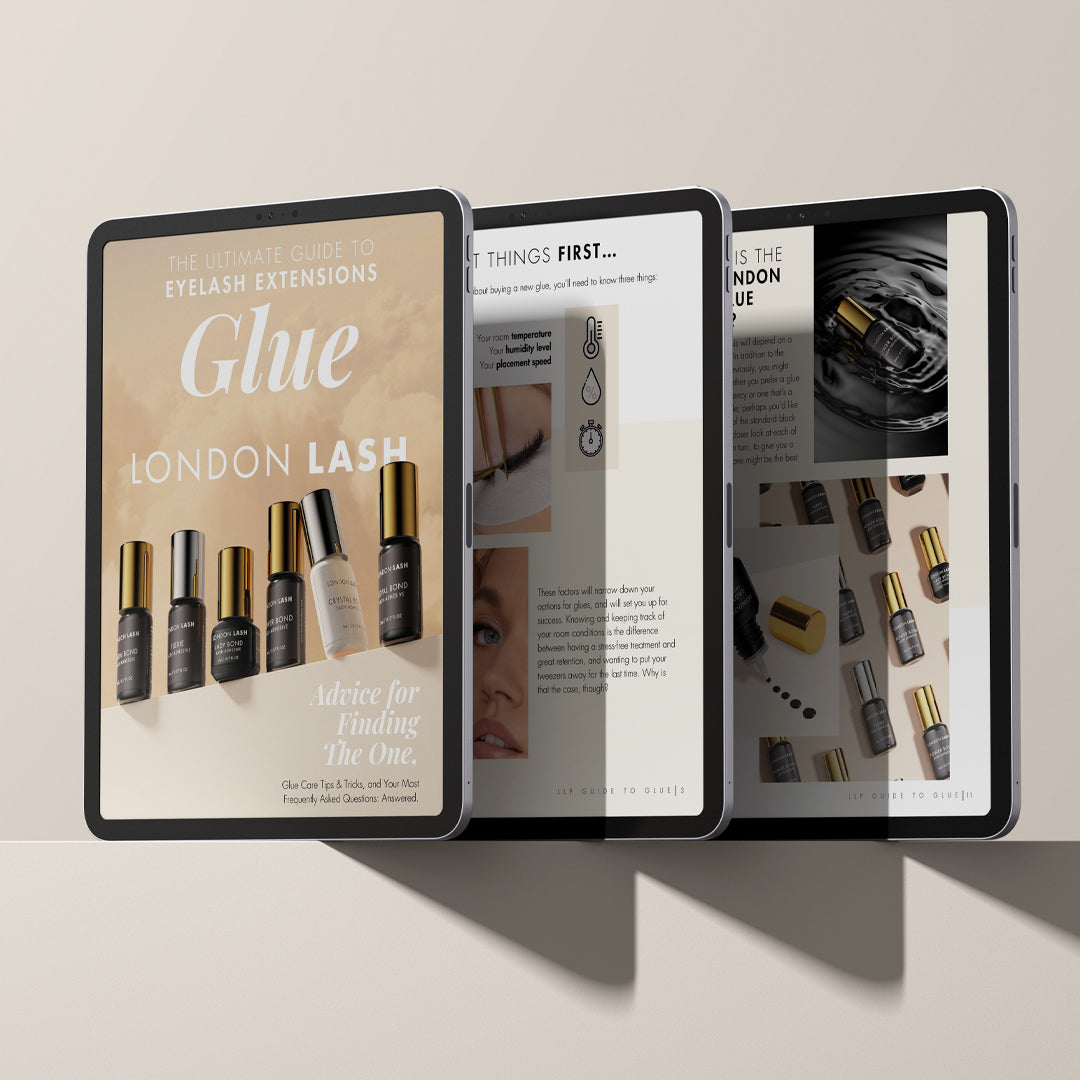
Some brands do have glues which they might market as sensitive, which will be very slow to cure and they will still have cyanoacrylate present in their ingredients. You can try them, of course, and they might even help, but you should exercise caution at any rate. Find out more about the complete London Lash adhesive range in our comprehensive ebook: The Ultimate Guide to Eyelash Extensions Glue.
Are There Any Lash Extensions Glues Without Cyanoacrylate?
Cyanoacrylate is present in all glues, from super glue to lash glue, therefore without this ingredient, glue simply does not cure and dry. There are glues being developed which don’t contain cyanoacrylate and they are popping up very sporadically and rarely. Previously, at London Lash we tested one but it didn’t work the way we hoped it would, and the retention wasn’t anywhere near as good. Since then, they’ve been more difficult to source from developers and brands alike, but if they ever become available and are of excellent quality, rest assured we’ll be first in line to add them to our lash extensions glue collection!
Sensitive Lash Glue FAQs
Is sensitive lash glue safe for clients with adhesive allergies?
A product described as sensitive cannot be assumed to be safe for someone with a known or suspected adhesive allergy. The term does not guarantee that a product is free from potential allergens. If a client has previously reacted to eyelash-extension adhesive, the technician should not promise that switching glue will prevent another reaction. The client should seek appropriate medical advice before considering further treatment.
Is there a hypoallergenic eyelash-extension glue?
“Hypoallergenic” does not mean that an adhesive is incapable of causing an allergic response. Product formulations vary, and a client or technician may react to one or more ingredients. Check the ingredient information, safety data and manufacturer’s guidance rather than relying solely on a sensitive or hypoallergenic marketing claim.
Does sensitive lash glue contain cyanoacrylate?
Many professional eyelash-extension adhesives marketed as sensitive still contain a form of cyanoacrylate. The exact ingredients and concentrations differ between products, so technicians should check the label and safety documentation for the individual adhesive.
Can you buy eyelash glue without cyanoacrylate?
Alternative adhesive formulations may be available, but their ingredients, curing behaviour, application method and suitability can differ from conventional professional lash adhesives. A cyanoacrylate-free claim does not automatically mean that a product is allergy-free or suitable for every client. Always check the manufacturer’s instructions and safety information.
What is the difference between a lash-glue allergy and irritation?
An allergy involves an immune response to an ingredient, whereas irritation can result from direct exposure to adhesive vapours or another product used during the treatment. Signs may overlap, so lash technicians should not attempt to diagnose the cause. The treatment should be stopped and the client directed towards appropriate medical guidance when necessary.
Can a client have eyelash extensions again after reacting to lash glue?
A client should not simply be switched to another adhesive following a suspected allergic response. A product labelled sensitive does not guarantee that another reaction will not occur. The technician should follow the adhesive manufacturer’s instructions, their training and insurance requirements, and the client should seek appropriate medical guidance.
Does a patch test guarantee that lash glue will be safe?
No test can guarantee that a reaction will not occur during or after a future treatment. Technicians should follow the patch-testing instructions supplied by the manufacturer and the requirements of their insurer. A negative result should not be presented to the client as proof that an adhesive is completely risk-free.
Is sensitive strip-lash glue the same as eyelash-extension adhesive?
No. Strip-lash and cluster-lash adhesives are designed for different application methods from professional eyelash-extension adhesives. Professional extension glue should only be used by trained technicians and must never be used as a substitute for an adhesive intended for self-applied strip or cluster lashes.
Check out these featured products